
 English
 česky
 Deutsch
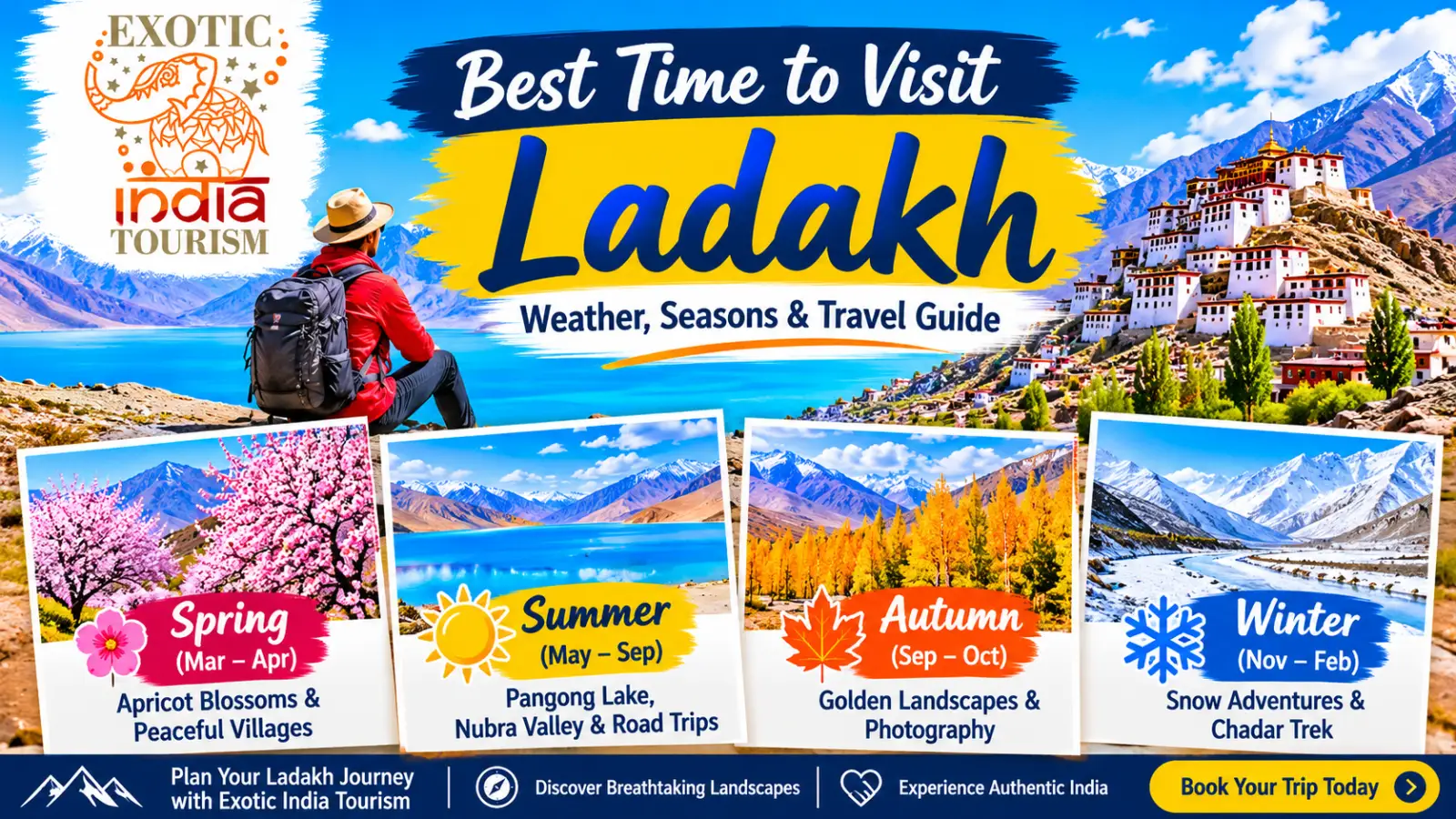
Best Time to Visit Ladakh: A Complete Month-by-Month Travel Guide
Ladakh is one of India's most extraordinary mountain destinations, where snow-covered Himalayan peaks, ancient Buddhist monasteries, turquoise lakes and dramatic high-altitude deserts create unforgettable scenery. However, choosing the right time to visit can make a significant difference to your travel experience.
The best time to visit Ladakh generally falls between May and September, when temperatures become more comfortable, major tourist routes become accessible and travellers can explore popular attractions such as Pangong Lake, Nubra Valley and Khardung La.
Nevertheless, every season offers something different. Summer is ideal for sightseeing and road trips, autumn brings golden mountain landscapes, spring welcomes blooming apricot orchards, and winter attracts adventurous travellers looking for snow-covered scenery and frozen river experiences.
This guide explains Ladakh's weather month by month, the best season for different activities, road conditions, local festivals and essential travel tips to help you plan your journey confidently.
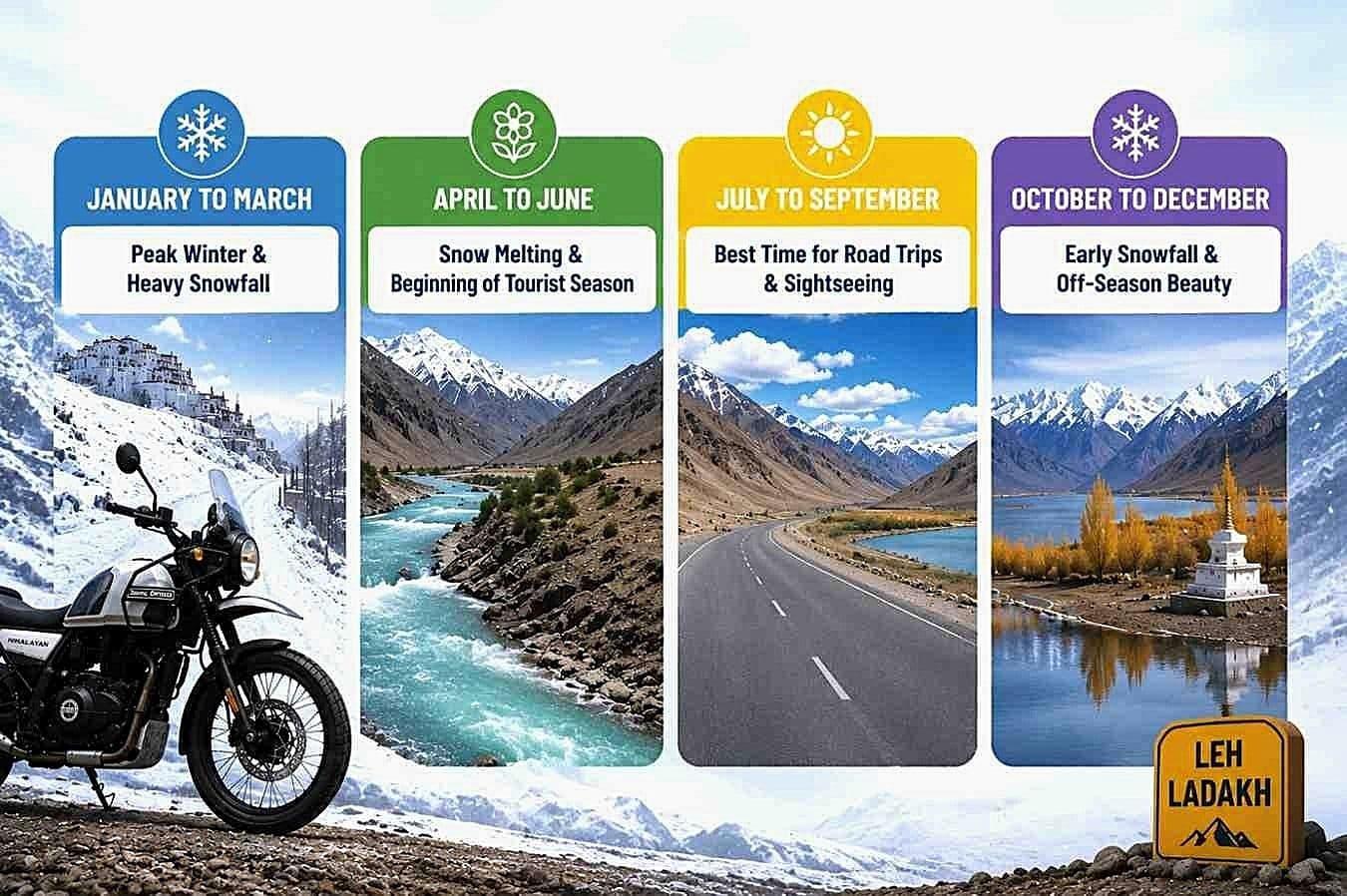
Where Is Ladakh and Why Does Timing Matter?
Located in the northernmost part of India, Ladakh is a high-altitude region surrounded by the Karakoram and Himalayan mountain ranges. Its dramatic landscapes include cold deserts, glacial valleys, alpine lakes and some of the world's highest motorable mountain roads.
Leh, the region's main town, sits approximately 3,500 metres above sea level. This elevation creates challenging weather conditions and makes acclimatisation an important part of every travel itinerary.
Unlike many other Indian holiday destinations, Ladakh experiences significant seasonal changes. Heavy snowfall can close mountain passes during winter, while summer provides better access to remote valleys and lakes.
Therefore, your ideal travel dates depend on what you want to experience, whether that means sightseeing, motorcycle adventures, trekking, photography or cultural exploration.
Best Time to Visit Ladakh by Season

The year in Ladakh can be divided into four main travel seasons. Each offers a different combination of weather, accessibility and experiences.
1. Summer (May to September) – Best Overall Season
Best overall time
Summer is generally considered the best season to explore Ladakh. Snow begins melting, mountain roads gradually reopen, and visitors can access many of the region's most famous attractions.
Daytime temperatures are usually pleasant, although nights can remain cold, especially around lakes and mountain passes.
What makes summer special?
Visit the spectacular Pangong Lake and its changing shades of blue.
Explore the sand dunes and Bactrian camel experiences in Nubra Valley.
Enjoy scenic drives through Khardung La and Chang La when roads are accessible.
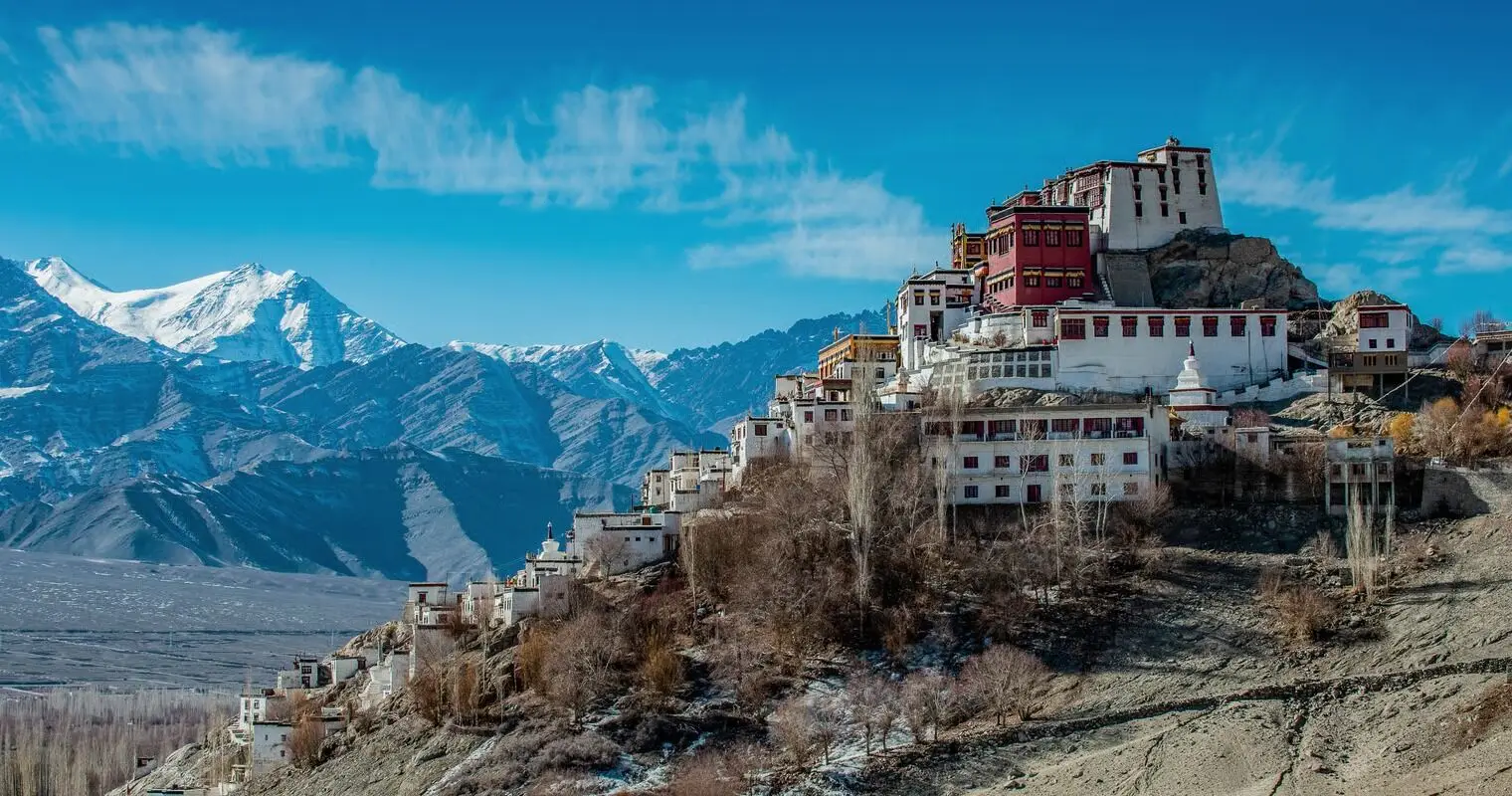
Discover historic monasteries, including Hemis and Thiksey.
Experience trekking, camping and motorcycle journeys.
July and August are particularly popular because many major tourist routes are accessible. However, these months also attract more visitors, so accommodation and transport should be arranged in advance.
One important consideration is that the approach roads through Himachal Pradesh and Kashmir can experience weather-related disruptions. Always check current road conditions before departure.
2. Autumn (September to October) – Best for Photography

Autumn is an excellent choice for travellers who prefer quieter surroundings and beautiful natural scenery.
As summer crowds begin to decrease, the landscapes around Leh and nearby valleys take on golden and earthy colours. Clear skies and crisp mountain air also create excellent conditions for photography.
Best experiences during autumn:
Photograph golden poplar trees around Leh.
Enjoy peaceful visits to Buddhist monasteries.
Explore Nubra Valley and surrounding mountain landscapes, subject to road conditions.
Experience local village life without peak-season crowds.
Enjoy comfortable daytime sightseeing with colder evenings.
September is generally a particularly attractive month because many major tourist routes remain accessible. By October, snowfall and falling temperatures can affect access to high mountain passes.
3. Spring (March to April) – Best for Apricot Blossoms

Spring offers a completely different perspective of Ladakh. After a long winter, the region gradually begins to awaken as snow melts in lower areas and apricot trees bloom in selected valleys.
This season is particularly appealing to travellers interested in local culture, traditional villages and peaceful photography.
Why visit in spring?
Witness beautiful apricot blossoms in selected villages.
Explore Leh town and its historic attractions.
Experience traditional Ladakhi hospitality.
Enjoy fewer tourists compared with the summer peak.
Capture the contrast between flowering trees and snow-covered mountains.
However, spring is not the best choice for a conventional road trip covering every major attraction. Several high-altitude roads and remote routes may remain closed because of snow.
4. Winter (November to February) – Best for Snow Adventures

Winter transforms Ladakh into a spectacular world of frozen rivers, snow-covered villages and dramatic white mountain landscapes.
Although temperatures can fall far below freezing, this season attracts experienced adventure travellers seeking something beyond conventional sightseeing.
Popular winter experiences include:
Chadar Trek on the frozen Zanskar River, when conditions permit.
Photography of snow-covered monasteries and villages.
Experiencing the traditional Losar celebrations.
Discovering the peaceful winter atmosphere of Leh.
Enjoying unique Himalayan landscapes away from summer crowds.
Winter travel requires careful preparation. Some remote attractions become difficult or impossible to reach, and temperatures can become extremely harsh.
The Chadar Trek is also dependent on natural ice conditions, so its availability and safety cannot be guaranteed every year.
Best Time to Visit Ladakh Month by Month
Understanding monthly weather conditions helps you choose the right dates for your holiday.
| Month | Weather and conditions | Travel suitability |
|---|---|---|
| January | Extremely cold, frozen landscapes | Winter adventures |
| February | Severe cold, snow-covered scenery | Specialised winter trips |
| March | Cold, gradual seasonal transition | Leh sightseeing |
| April | Apricot blossoms, melting snow | Photography and culture |
| May | Warming weather, roads gradually open | Early-season trips |
| June | Pleasant days, accessible routes | Sightseeing and road trips |
| July | Warmest period, busy tourist season | All-round travel |
| August | Pleasant days, possible weather disruptions | Adventure and sightseeing |
| September | Clear skies, autumn colours | Photography and road trips |
| October | Colder weather, possible snowfall | Quiet sightseeing |
| November | Very cold, limited road access | Winter experiences |
| December | Freezing temperatures, snow | Winter photography |
Note: These are general seasonal patterns, not guaranteed conditions. Actual temperatures, snowfall and road openings vary from year to year.
Which Months Are Best for Different Ladakh Experiences?
Not every traveller visits Ladakh for the same reason. Some want to explore its famous lakes, while others dream of motorcycle journeys, challenging treks or cultural experiences.
Here is a quick guide to choosing the right travel period.
| Travel experience | Recommended months |
|---|---|
| General sightseeing | June–September |
| Pangong Lake visit | June–September |
| Nubra Valley exploration | June–September |
| Motorcycle road trips | June–September |
| Mountain photography | September–October |
| Apricot blossom photography | March–April |
| Trekking | June–September, depending on route |
| Chadar Trek | January–February, subject to conditions |
| Cultural festivals | Dates vary by monastery and local calendar |
Best Time to Visit Pangong Lake

Pangong Lake is among Ladakh's most famous attractions. Its extraordinary blue water and surrounding mountain scenery make it a highlight of many Himalayan itineraries.
June to September is generally the most suitable period for visiting. During these months, access is usually better, and the lake offers spectacular views.
Early mornings and late afternoons are particularly rewarding for photography because the changing sunlight creates different colours across the water.
Best Time to Visit Nubra Valley

Nubra Valley is famous for its striking combination of sand dunes, green villages, mountain scenery and Bactrian camels.
June to September is generally the best period for exploring the valley. Travellers can visit Diskit Monastery, enjoy the Hunder sand dunes and experience the region's distinctive landscape.
Best Time for a Ladakh Motorcycle Trip

For motorcycle enthusiasts, June to September usually provides the most practical riding conditions.
During this period, major mountain routes are more likely to remain accessible. Riders can enjoy spectacular mountain roads, high passes and remote villages.
However, mountain weather can change quickly. Check road conditions, carry appropriate riding equipment and avoid travelling through dangerous weather.
Important Festivals and Cultural Experiences in Ladakh
Ladakh is not only famous for its landscapes but also for its rich Tibetan Buddhist heritage and traditional village culture.
Monasteries play an important role in local life, and their annual festivals offer visitors an opportunity to experience traditional music, masked dances and religious ceremonies.
Some well-known cultural events include:
Hemis Festival: A major monastery celebration featuring traditional masked dances and religious performances.
Losar: The Ladakhi and Tibetan New Year, celebrated with family gatherings, traditional food and cultural activities.
Dosmoche: A traditional festival celebrated in Leh and other parts of Ladakh.
Ladakh Festival: A cultural celebration showcasing traditional music, dance, crafts and regional heritage.
Festival dates can change according to the traditional lunar calendar. Check the relevant monastery or local tourism announcements before planning your visit around a particular celebration.
How to Reach Ladakh During Different Seasons
Your travel experience also depends on how you plan to reach Ladakh.
By Air
Leh has an airport with flights connecting it to major Indian cities, particularly Delhi. Flights operate throughout the year, although weather conditions can occasionally affect schedules.
Flying is convenient, especially during winter when mountain roads are closed.
By Road
There are two principal road routes to Ladakh:
Srinagar–Leh Highway: Connects Ladakh with Kashmir through Zoji La and Kargil.
Manali–Leh Highway: Connects Ladakh with Himachal Pradesh through several spectacular mountain passes.
Both routes are seasonal. They generally become accessible around late spring or early summer and close again as winter snowfall increases. Exact opening and closing dates depend on snow clearance and weather conditions.
For current travel planning, check the official Ladakh Tourism website for travel advisories and regional information.
Travellers who want to combine multiple Himalayan destinations can also explore customised India holiday packages to plan a journey around their preferred travel dates and interests.
Essential Travel Tips Before Visiting Ladakh
Ladakh is a beautiful destination, but its high altitude and remote geography require additional preparation.
Keep these practical tips in mind before travelling:
1. Allow time for acclimatisation: Leh is approximately 3,500 metres above sea level. The Leh district administration advises visitors to allow at least 48 hours to acclimatise before travelling to higher-altitude destinations.
2. Stay hydrated: Drink sufficient water and avoid excessive physical activity during your first days.
3. Pack warm clothing: Even during summer, temperatures can drop considerably at night and in high-altitude areas.
4. Use sun protection: Carry sunglasses, sunscreen, a hat and lip balm because sunlight and UV exposure can be intense at high elevations.
5. Check road conditions: Mountain routes can close unexpectedly because of snowfall, landslides or other weather-related disruptions.
6. Carry essential medicines: Bring your regular prescribed medication and a basic first-aid kit. Consult a healthcare professional about altitude-related precautions before travelling.
7. Respect local traditions: Dress appropriately at monasteries, ask permission before photographing residents and follow local customs.
8. Keep some cash: Card and digital payment facilities may be unreliable in remote villages.
For detailed health guidance, read the official Leh District Administration's acclimatisation advisory.
Understanding Altitude Sickness
Acute Mountain Sickness (AMS) is an important consideration when visiting Ladakh. It can affect travellers regardless of age or fitness level.
Common symptoms include:
Headache
Nausea
Dizziness
Unusual tiredness
Difficulty sleeping
Do not ignore these symptoms. Stop ascending if they develop, and seek medical advice. Severe symptoms, particularly breathlessness at rest, confusion or difficulty walking, require immediate medical attention and descent.
The most important rule is simple: never rush your journey to higher altitudes.
How Many Days Are Enough for a Ladakh Trip?
For international travellers, a well-planned Ladakh holiday should allow enough time for acclimatisation and sightseeing.
Here is a suggested itinerary duration:
| Trip duration | Recommended experience |
|---|---|
| 4–5 days | Leh and nearby monasteries |
| 6–7 days | Leh, Nubra Valley and Pangong Lake |
| 8–10 days | Leh, Nubra, Pangong and additional local experiences |
| 12–14 days | Extended Ladakh exploration and selected trekking experiences |
These durations are indicative and should be adjusted according to road conditions, altitude requirements and personal travel preferences.
If you are visiting Ladakh for the first time, a 7–10-day itinerary is a practical starting point, provided it includes adequate acclimatisation.
Frequently Asked Questions About the Best Time to Visit Ladakh
1. What is the best time to visit Ladakh for the first time?
June to September is generally the best period for first-time visitors. Most popular tourist routes are more accessible, and the weather is comparatively comfortable for sightseeing and outdoor activities.
2. Is July a good month to visit Ladakh?
Yes. July is one of the most popular months because many mountain roads and tourist attractions are accessible. However, it is also a busy period, so advance bookings are recommended.
3. Can I visit Ladakh in December?
Yes. You can fly to Leh during December, subject to flight operations and weather. However, temperatures are extremely low, and many mountain routes and remote attractions may be inaccessible.
4. Which month is best for visiting Pangong Lake?
June to September is generally the best period for visiting Pangong Lake because road accessibility and sightseeing conditions are usually more favourable.
5. Is Ladakh suitable for a family holiday?
Yes, Ladakh can be suitable for families, provided the itinerary considers altitude, health, accommodation and travel distances. Families with young children or elderly travellers should consult a healthcare professional before planning a high-altitude trip.
6. Is September better than July for visiting Ladakh?
September can be a better choice for travellers who prefer fewer crowds, clear mountain scenery and autumn colours. July is generally better for those prioritising peak-season accessibility and summer activities.
7. Do I need warm clothes in Ladakh during summer?
Absolutely. Although daytime temperatures can be pleasant, evenings, nights and high mountain passes can become very cold. Layered clothing, a warm jacket and comfortable footwear are essential.
Conclusion: Choose the Right Season for Your Ladakh Adventure
Choosing the best time to visit Ladakh depends on the experiences you want from your holiday. For most travellers, May to September offers the best combination of accessibility, sightseeing opportunities and outdoor adventures. September and early October are particularly attractive for photography and quieter travel, while spring and winter provide unique experiences for those seeking something different.
From the beautiful shores of Pangong Lake to the peaceful monasteries of Thiksey and the spectacular landscapes of Nubra Valley, Ladakh offers something memorable in every season.
Plan your journey according to the weather, allow sufficient time for acclimatisation and stay flexible with your travel arrangements.
Ready to discover the Himalayas? Explore Exotic India Tourism's Ladakh and Golden Triangle journey and start planning an unforgettable Indian adventure.

Kommentare
Seien Sie der Erste und hinterlassen Sie einen Kommentar zu diesem Artikel.
Kommentar schreiben