
 English
 česky
 Deutsch
Kashmir Great Lakes Trek Guide: Explore Kashmir's Alpine Paradise
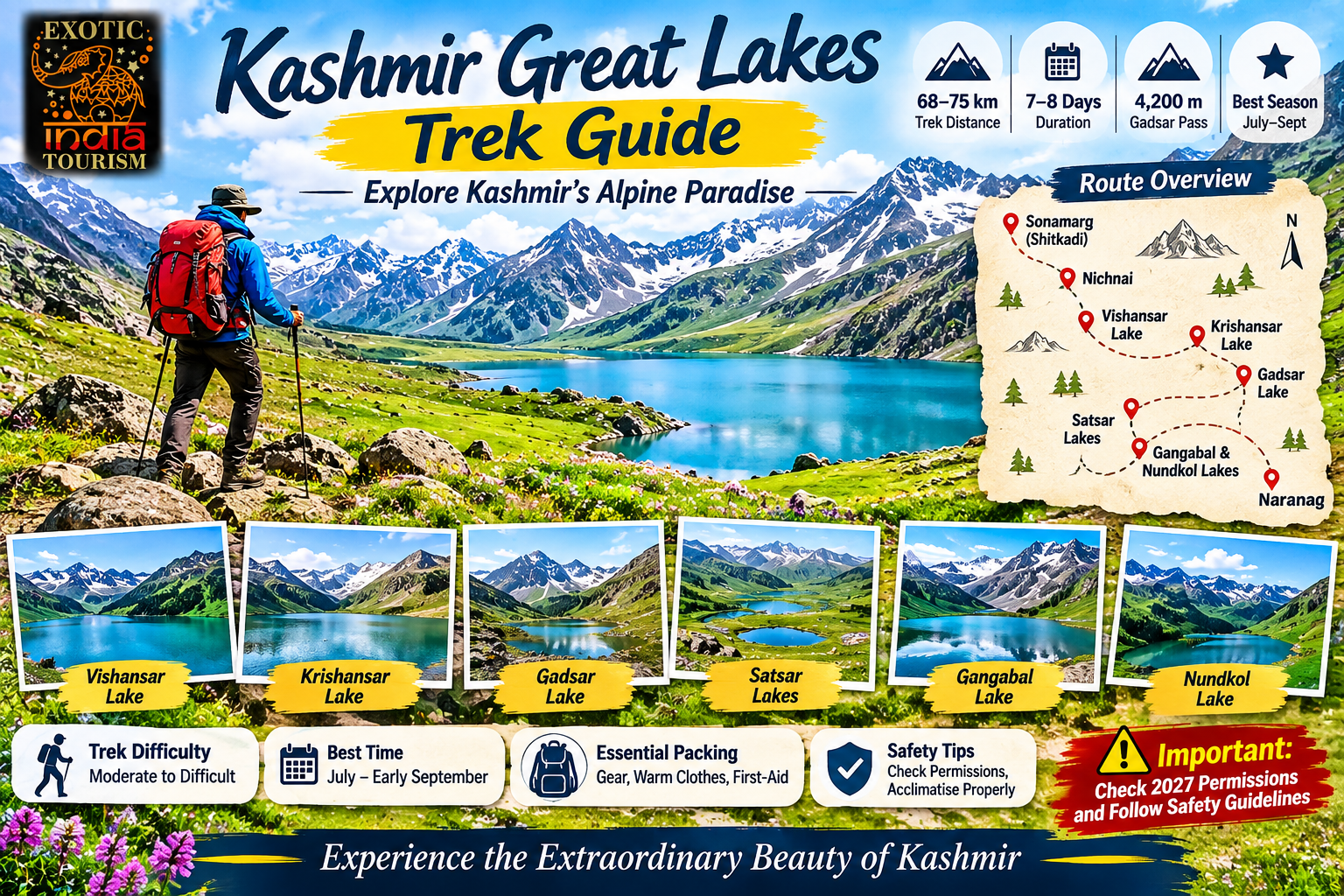
The Kashmir Great Lakes trek guide introduces adventure lovers to one of the most spectacular trekking experiences in the Indian Himalayas. Located in the breathtaking Kashmir Valley, this famous mountain trail takes you through turquoise alpine lakes, vast green meadows, snow-covered peaks and dramatic mountain passes.
Starting near Sonamarg and traditionally ending at Naranag, the journey connects several beautiful high-altitude lakes, including Vishansar, Krishansar, Gadsar, Gangabal and Nundkol. Every section offers a different landscape, making the experience particularly rewarding for nature lovers, photographers and experienced hikers.
However, the Kashmir Great Lakes trek is more than a scenic walk. Its high altitude, demanding ascents, unpredictable mountain weather and remote campsites require proper preparation.
Whether you are an international traveller planning your first Himalayan adventure or an experienced trekker looking for another remarkable mountain journey, this guide covers everything you should know before planning your trip.
What Makes the Kashmir Great Lakes Trek Special?
The Kashmir Great Lakes trek is famous for its remarkable combination of alpine scenery and challenging mountain terrain.
Unlike many Himalayan routes that focus on a single summit or destination, this trek takes you through several valleys and lake basins. You experience changing landscapes almost every day, from dense forests and flowing streams to colourful wildflower meadows and rocky mountain passes.

The route is commonly described as a seven-lake trek. Its highlights include the following:
- Vishansar Lake: A beautiful alpine lake surrounded by expansive mountain scenery.
- Krishansar Lake: Another stunning high-altitude lake located close to Vishansar.
- Gadsar Lake: A picturesque lake beneath the dramatic Gadsar Pass.
- Satsar Lakes: A collection of smaller alpine lakes scattered across a mountain valley.
- Gangabal Lake: A magnificent glacial lake beneath Mount Harmukh.
- Nundkol Lake: A scenic companion to Gangabal, known for its peaceful surroundings.
The exact number of visible lakes can vary with seasonal water levels and trail conditions.
The combination of these landscapes makes the Kashmir Great Lakes circuit one of India's most memorable high-altitude trekking experiences.
Kashmir Great Lakes Trek Guide: Route, Distance and Difficulty
Before planning your journey, it is important to understand the physical demands and basic details of the route.
| Trek Information | Details |
|---|---|
| Region | Kashmir, Jammu and Kashmir, India |
| Starting point | Shitkadi, near Sonamarg |
| Ending point | Naranag |
| Total distance | Approximately 68–75 km |
| Trekking duration | 6–7 walking days |
| Overall trip | Approximately 7–8 days |
| Highest point | Gadsar Pass, approximately 4,200 metres |
| Difficulty | Moderate to difficult |
| Recommended season | July to early September, subject to permission |
| Accommodation | Tents and designated campsites |
Distances and daily timings vary between trekking operators and route conditions.
Is the Kashmir Great Lakes Trek Difficult?
The trek is generally graded moderate to difficult because of its high altitude, extended walking days and repeated mountain ascents and descents.
You should be comfortable walking for approximately five to eight hours on several consecutive days. Certain sections involve steep climbs, uneven rocky paths, river crossings and exposed mountain terrain.
The Gadsar Pass crossing is particularly demanding, while the descent towards Naranag can be challenging for your knees.
Although technical climbing skills are not normally required on the standard route, good physical fitness, appropriate equipment and an experienced trekking team are essential.
Day-by-Day Kashmir Great Lakes Trek Itinerary
The traditional itinerary follows the route from Shitkadi near Sonamarg to Naranag. The following is a general planning example, not confirmation that the route is currently open.
Day 1: Srinagar to Sonamarg (Shitkadi)
Your adventure traditionally begins in Srinagar, followed by a scenic drive towards Sonamarg.
The journey takes you alongside the Sindh River, passing beautiful mountain villages, forests and impressive Himalayan landscapes.
After reaching the Shitkadi base camp, trekkers usually complete registration, equipment checks and a briefing with their trekking team.
Use this day to organise your backpack, hydrate properly and prepare for the upcoming climb.
Day 2: Shitkadi to Nichnai
The first trekking day introduces you to Kashmir's beautiful mountain terrain.
The trail gradually climbs through forests and open meadows before reaching the Nichnai valley.
You will encounter flowing streams, grazing areas and traditional shepherd settlements along the way.
Nichnai is a high-altitude campsite, so take your time and avoid unnecessary exertion.
Day 3: Nichnai to Vishansar Lake
This section involves crossing the Nichnai Pass before descending towards the beautiful Vishansar Lake basin.
As you approach the pass, the landscape becomes increasingly dramatic, with rocky slopes and distant snow-covered peaks.
Vishansar Lake is one of the most memorable highlights of the entire trek. Its changing shades of blue and green create a spectacular contrast against the surrounding mountains.
Trekkers generally camp in the designated area near the lake.
Day 4: Vishansar to Gadsar Lake via Gadsar Pass

This is traditionally considered one of the most challenging days of the journey.
The trail passes near Krishansar Lake before climbing towards Gadsar Pass, which reaches approximately 4,200 metres.
From the higher sections, trekkers can enjoy breathtaking views of the surrounding valleys and alpine lakes.
After crossing the pass, the trail descends towards Gadsar Lake, a beautiful mountain lake surrounded by rugged slopes and seasonal greenery.
An early start and careful attention to changing weather conditions are important.
Day 5: Gadsar to Satsar Lakes
After the demanding previous day, the journey continues through open meadows, mountain streams and rolling landscapes.
The Satsar region is particularly interesting because it contains a collection of smaller alpine lakes.
Depending on the season and water levels, some lakes may be more visible than others.
This section also offers opportunities to observe local shepherding traditions and the natural beauty of Kashmir's high-altitude landscapes.
Day 6: Satsar to Gangabal and Nundkol Lakes

The route continues towards Zaj Pass, crossing sections of rocky terrain and boulder fields.
After completing the ascent and descent, trekkers gradually approach the spectacular Gangabal and Nundkol lakes.
Situated beneath the impressive Mount Harmukh, these lakes create one of the most beautiful settings on the entire route.
Take time to appreciate the mountain scenery while respecting the designated camping areas and local environmental rules.
Day 7: Gangabal to Naranag and Return to Srinagar
The final trekking section involves a long descent through mountain slopes and forested terrain towards Naranag.
Although the descent brings relief from the high-altitude sections, uneven ground can make it physically demanding.
Naranag is also known for its historic temple ruins, adding a cultural dimension to the end of your journey.
After reaching the village, trekkers traditionally arrange road transport back to Srinagar.
Best Time to Visit Kashmir for the Great Lakes Trek
The traditional trekking season generally runs from July to early September, when the high mountain meadows become greener and the alpine lakes are more accessible.
However, the actual operating season depends on snow conditions, weather, security arrangements and official permissions.
Here is what different months generally offer:
| Month | Expected Conditions |
|---|---|
| June | Lingering snow may affect high passes and trail accessibility. |
| July | Green meadows, seasonal flowers and flowing streams. |
| August | Lush mountain scenery and generally favourable trekking conditions when the route is open. |
| Early September | Clearer mountain views, colder nights and changing meadow colours. |
| October–May | Winter snow generally makes the standard route unsuitable for trekking. |
Our recommendation: For a traditional Kashmir Great Lakes experience, July and August are popular choices. Early September can also be attractive for experienced trekkers prepared for colder conditions.
Always confirm the actual opening dates before booking.
Important Trekking Access and Permission Update for 2027
This is particularly important for anyone planning the trek in the coming season.
Following the April 2025 Pahalgam attack, trekking activities across several parts of Kashmir faced significant restrictions. During 2026, the Kashmir Great Lakes circuit was among the routes affected by these restrictions.
As of 14 November 2026, the full Sonamarg-to-Naranag circuit should not be considered automatically open for the 2027 season. Reports of partial reopening or changes affecting individual routes do not necessarily establish permission for the complete circuit.
Before making travel arrangements:
- Check the latest announcements from the Jammu and Kashmir Tourism Department.
- Contact the relevant district administration for route-specific permission.
- Confirm whether forest and security clearances have been issued.
- Choose an experienced, appropriately registered trekking operator.
- Obtain written confirmation of route access before making non-refundable payments.
Do not attempt restricted trails independently or assume that accepting bookings means an operator has received official clearance.
Responsible planning is essential for both visitor safety and the local communities that depend on mountain tourism.
Essential Packing List for the Kashmir Great Lakes Trek

Mountain weather can change quickly, even during the traditional summer trekking season. Packing suitable clothing and equipment is therefore essential.
Here are the important items to prepare:
Clothing
- Waterproof and windproof trekking jacket.
- Thermal base layers.
- Fleece or insulated mid-layer.
- Comfortable trekking trousers.
- Warm socks and gloves.
- Sun hat and warm cap.
- Waterproof trekking footwear.
Trekking Equipment
- Comfortable backpack with a rain cover.
- Sleeping bag suitable for expected temperatures.
- Trekking poles.
- Headlamp with spare batteries.
- Reusable water bottles.
- Sunglasses with proper UV protection.
- Personal first-aid kit.
Personal Essentials
- Sunscreen and lip balm.
- Personal medications.
- Basic toiletries.
- Identification documents.
- Power bank.
- High-energy snacks.
Ask your trekking operator which equipment, meals and camping facilities are included before purchasing or carrying additional gear.
Fitness, Altitude Safety and Health Precautions
Physical preparation is one of the most important parts of planning this trek.
The route reaches elevations above 4,000 metres, where the reduced oxygen availability can affect even physically fit travellers.
Begin preparing several weeks before departure.
Useful training activities include:
- Regular walking and hiking.
- Stair climbing.
- Cardiovascular exercises.
- Leg-strengthening workouts.
- Walking with a lightly loaded backpack.
However, fitness alone does not prevent altitude sickness.
Acute Mountain Sickness (AMS) can cause headaches, dizziness, nausea, fatigue and loss of appetite. More serious symptoms require immediate medical attention and descent.
According to the CDC's high-altitude travel guidance, gradual acclimatisation is important when travelling to high elevations.
Follow your guide's instructions, maintain proper hydration and never continue ascending when experiencing symptoms of altitude illness.
People with relevant medical conditions should seek professional medical advice before attempting this trek.
Local Culture and Responsible Trekking in Kashmir

One of the most rewarding aspects of trekking in Kashmir is experiencing its natural landscapes alongside traditional mountain life.
During the summer months, shepherd communities use high-altitude meadows for seasonal grazing. Their traditional lifestyle forms an important part of the region's cultural identity.
You may encounter shepherd shelters, grazing livestock and local guides who have developed extensive knowledge of the surrounding mountains.
A few responsible travel practices can make a meaningful difference:
- Respect local traditions and private grazing areas.
- Ask permission before photographing residents.
- Avoid disturbing livestock and wildlife.
- Carry reusable bottles instead of disposable plastic.
- Never leave food packaging or other waste behind.
- Follow designated trails and camping instructions.
If you are spending additional time in the region, explore the local heritage and things to do in Srinagar to experience Kashmir beyond its mountain landscapes.
Frequently Asked Questions About the Kashmir Great Lakes Trek
How many days are required for the Kashmir Great Lakes trek?
The traditional trekking route takes approximately six to seven walking days. Including road transfers and preparation, most itineraries require around seven to eight days.
How long is the Kashmir Great Lakes trek?
The complete route generally covers approximately 68–75 kilometres, depending on the itinerary, trail conditions and additional lake visits.
What is the highest point of the trek?
Gadsar Pass is the highest major point of the traditional route, reaching approximately 4,200 metres above sea level.
Can beginners attempt the Kashmir Great Lakes trek?
Beginners with excellent physical preparation may be able to complete the trek with a qualified team. However, it is not recommended as an easy introduction to Himalayan hiking because of the altitude and demanding terrain.
Previous trekking experience is beneficial.
Is camping available during the trek?
Yes. Traditional organised itineraries use designated high-altitude camping areas. Accommodation generally consists of tents, with meals and other support arranged by the trekking operator.
Is a guide necessary for the Kashmir Great Lakes trek?
Travelling with an experienced, authorised trekking team is strongly recommended. The remote terrain, changing weather and access requirements make professional support particularly important.
Is the Kashmir Great Lakes trek open in 2027?
The 2027 operating status must be confirmed through the relevant authorities. Do not assume that the full circuit is open until the necessary permissions are officially confirmed.
Conclusion: Experience the Extraordinary Beauty of Kashmir
The Kashmir Great Lakes trek is an unforgettable Himalayan adventure, combining spectacular alpine lakes, colourful meadows, dramatic mountain passes and fascinating local traditions.
From the turquoise waters of Vishansar and Krishansar to the magnificent setting of Gangabal beneath Mount Harmukh, every stage offers a different perspective on Kashmir's natural beauty.
However, a successful journey requires more than enthusiasm. Proper fitness, suitable equipment, responsible trekking practices and confirmed official permissions are essential.
If you are planning a wider holiday in the region, discover our Srinagar Gulmarg Pahalgam tour package for inspiration on combining Kashmir's famous destinations with memorable local experiences.
At Exotic India Tourism, we believe that the best journeys combine thoughtful planning, authentic experiences and a genuine appreciation for the places we explore.
Plan responsibly, travel respectfully and discover the extraordinary beauty of Kashmir.

Kommentare
Seien Sie der Erste und hinterlassen Sie einen Kommentar zu diesem Artikel.
Kommentar schreiben