
 English
 česky
 Deutsch
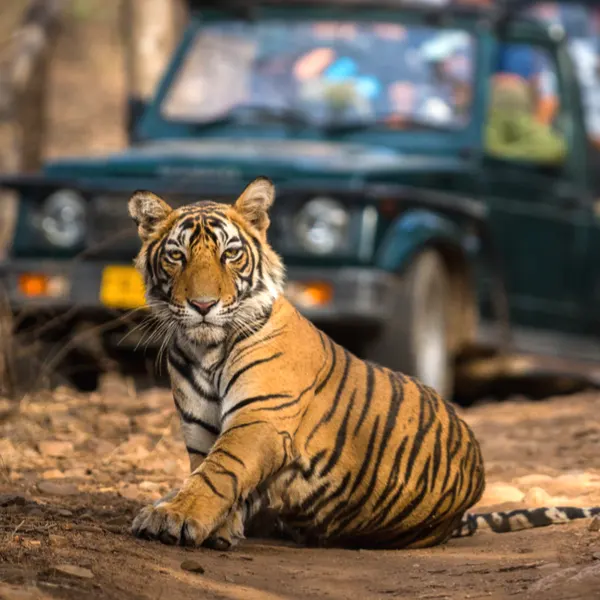
Plan your India tiger safari tour: compare Corbett, Ranthambore, Bandhavgarh and Kanha, pick the best season and book with Exotic India Tourism.
India Tiger Safari Tour: How to Plan the Best Trip to See Wild Tigers
An India tiger safari tour often begins before sunrise: a cold jeep, a cup of tea and a guide who reads alarm calls like a language. Then comes the wait, often long and silent, until a striped shape steps out of the grass. India offers some of the world’s most rewarding opportunities to see wild tigers. The government’s 2022 estimate counted 3,682 wild tigers here, roughly three-quarters of the world’s wild population.
This guide helps you plan your own trip. You will learn which national parks suit which traveller, when to go, how safari permits work and how to pair tiger country with India’s heritage, from the Taj Mahal to the temples of Khajuraho. It also gives you honest advice on sighting odds, because no operator can promise a tiger.
Why Choose an India Tiger Safari Tour?
India launched Project Tiger in 1973 with nine reserves. Today the country protects more than 50. The tiger population rose from 2,967 in 2018 to 3,682 in 2022, according to the National Tiger Conservation Authority, and Madhya Pradesh now leads all states with 785 tigers. Karnataka, Uttarakhand and Maharashtra follow.
For travellers, that conservation record turns into real choice. You can track tigers through sal forest and open meadows in central India, along river valleys at the foot of the Himalayas, or among ruined forts in Rajasthan’s dry hills.
A tiger safari also works as one chapter of a longer journey. Khajuraho’s UNESCO-listed temples sit a short drive from Panna National Park. Ranthambore Fort stands inside its own tiger reserve. Corbett lies close to the lake town of Nainital. A well-designed trip alternates jungle mornings with cultural afternoons, so you never spend a week doing one thing.
Best National Parks for an India Tiger Safari Tour
Five reserves anchor most itineraries. Each has a different landscape, so choose by temperament as well as tiger numbers.
| Park | State | Landscape | Known for |
| Jim Corbett | Uttarakhand | River valleys, Himalayan foothills | India’s oldest national park, elephants, birdlife |
| Ranthambore | Rajasthan | Dry forest, lakes, fort ruins | Scenery, easy access from the Golden Triangle |
| Bandhavgarh | Madhya Pradesh | Sal forest, grassy valleys, rocky ridges | High tiger density, ancient fort |
| Kanha | Madhya Pradesh | Sal forest and open meadows | Wide views, gaur, swamp deer |
| Panna | Madhya Pradesh | Dry forest and the Ken River | Tiger recovery story, Khajuraho nearby |
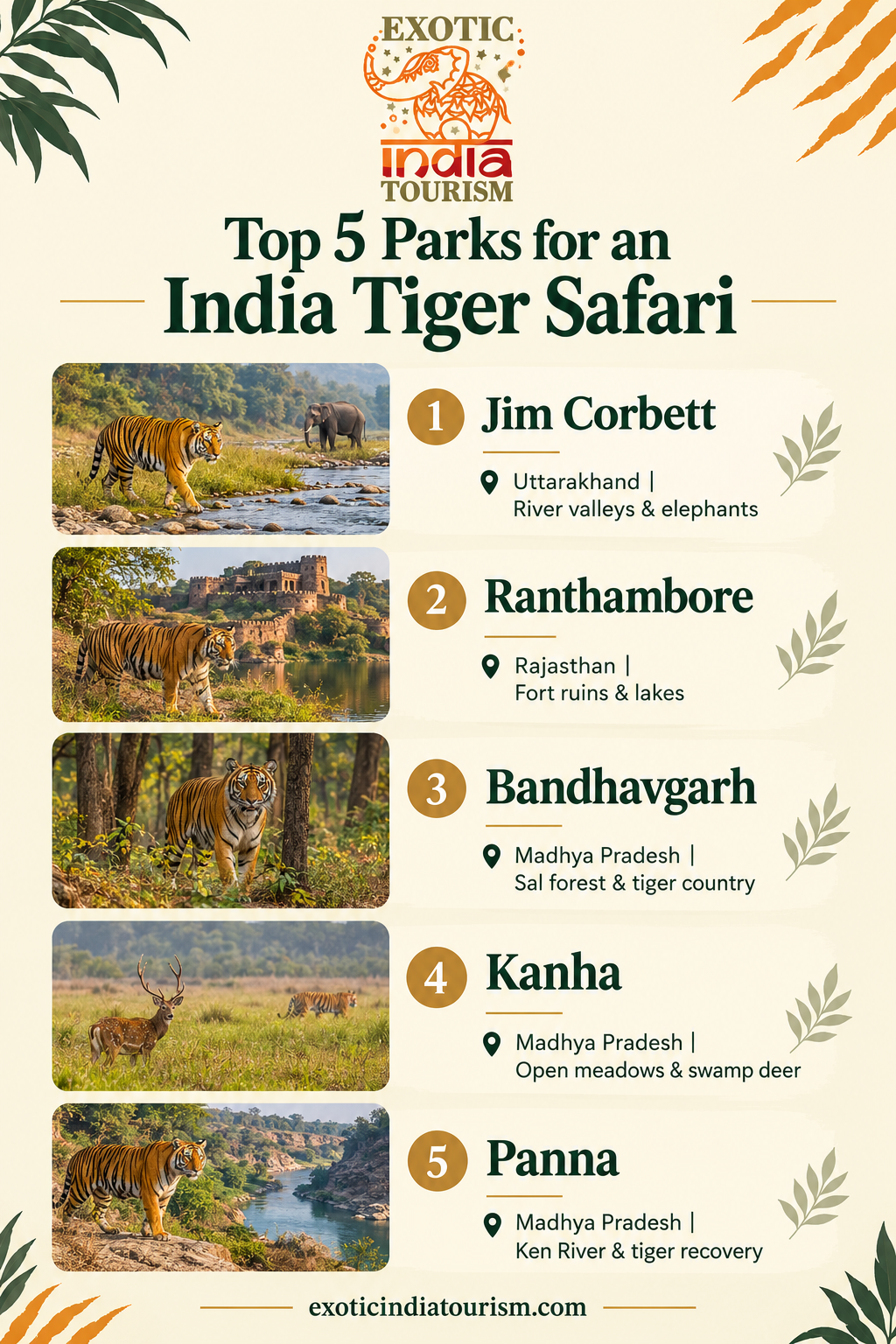
Jim Corbett National Park, Uttarakhand
Established in 1936, Corbett is India’s oldest national park. Its terrain mixes river valleys, grassland and forested ridges, and the 2022 national assessment recorded more tigers inside Corbett than inside any other single reserve (260). Elephants and birdlife add variety. Corbett also works well as a short break: our five-day Jim Corbett trip leaves Delhi by overnight train and adds the Garjiya Devi temple, Nainital and the former home of Jim Corbett.
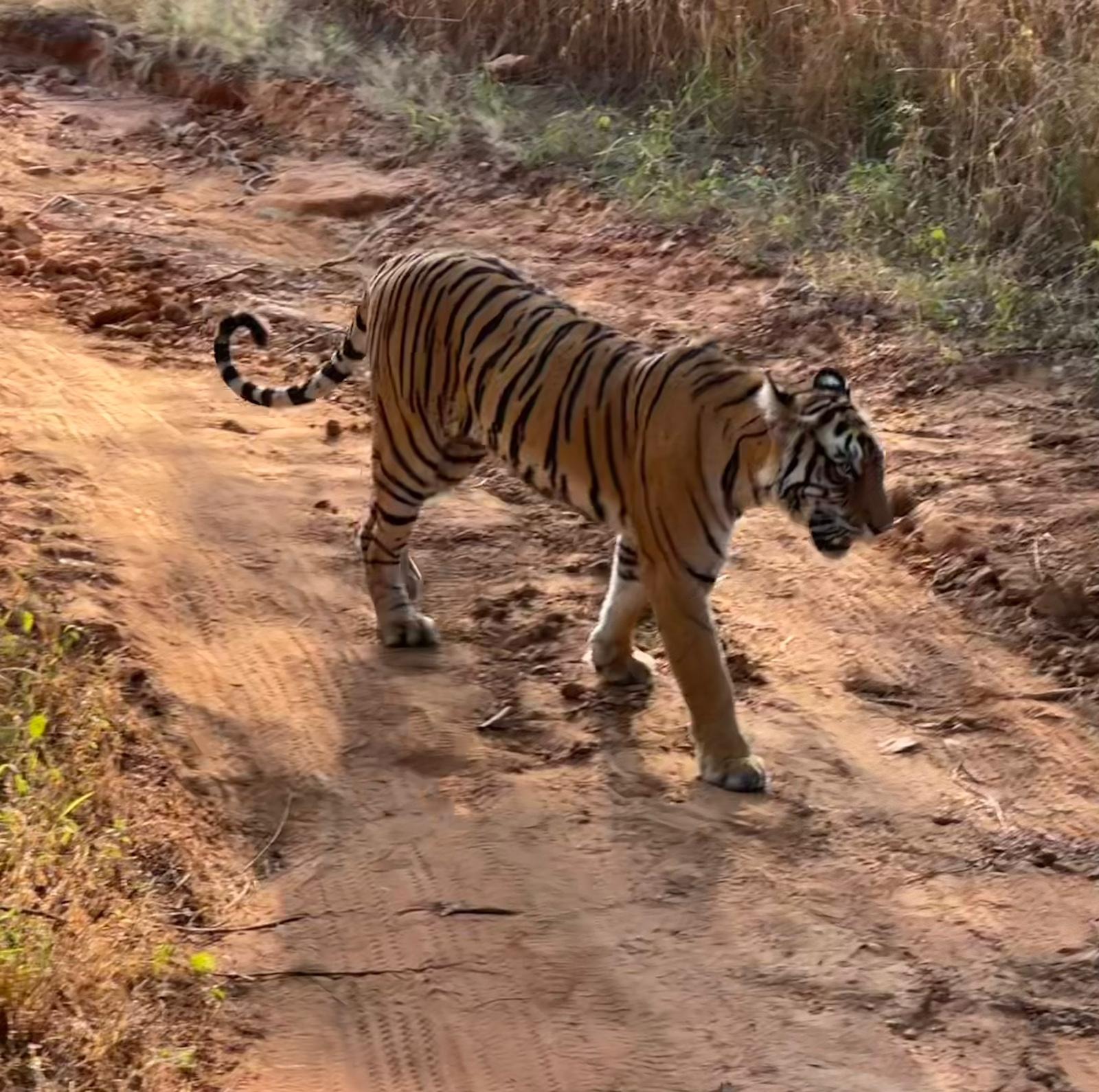
Ranthambore National Park, Rajasthan
Ranthambore combines dry forest, lakes and crumbling pavilions, and Ranthambore Fort rises from inside the park. Photographers love the way tigers appear against ruins. It also suits first-timers who have limited days, since it connects easily with Delhi, Agra and Jaipur. You can see it on our Golden Triangle, Varanasi and Ranthambore tour, or add it to the classic Golden Triangle route.
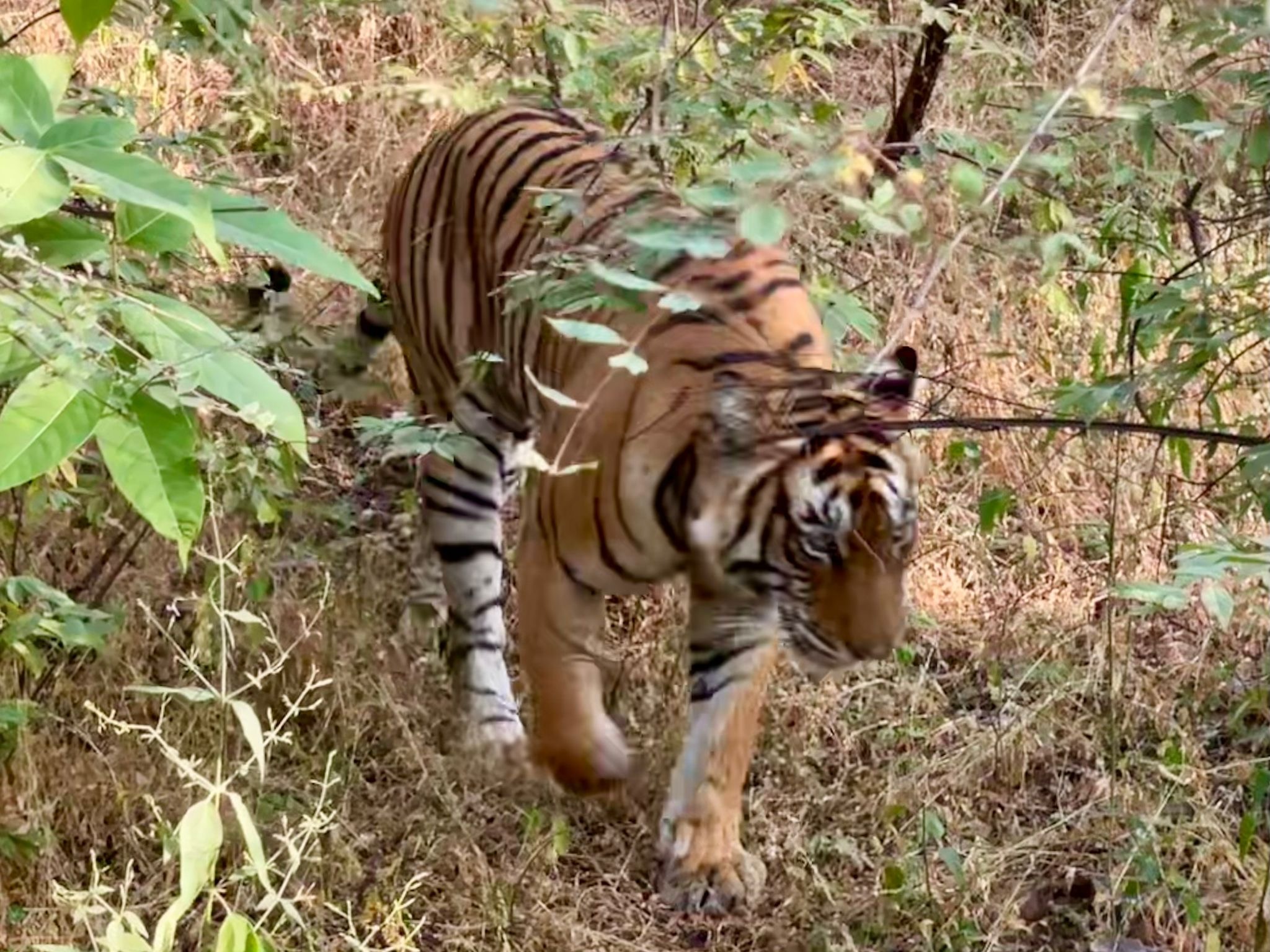
Bandhavgarh National Park, Madhya Pradesh
Bandhavgarh packs a lot of wilderness into a compact park of sal forest, grassy valleys and rocky ridges, with the ruins of an ancient fort overlooking it. Wildlife travellers rate it highly because it holds a relative abundance of tigers compared with other parks. Deer, langurs and wild boar share the forest, and the park is also famed for its white tiger history. Bandhavgarh is a strong choice for travellers hoping to maximise their chances of tiger sightings.
Kanha National Park, Madhya Pradesh
Kanha’s open meadows give you long sightlines that dense forest never allows. You can scan a grassland for tigers while herds of swamp deer graze in the foreground, and you may spot gaur, the world’s largest wild cattle. Many people link Kanha’s forests with Rudyard Kipling’s The Jungle Book, and the mix of tall sal trees and open grassland makes it easy to see why. It is a good choice if you enjoy wide landscapes and a broad variety of wildlife, not only tigers.
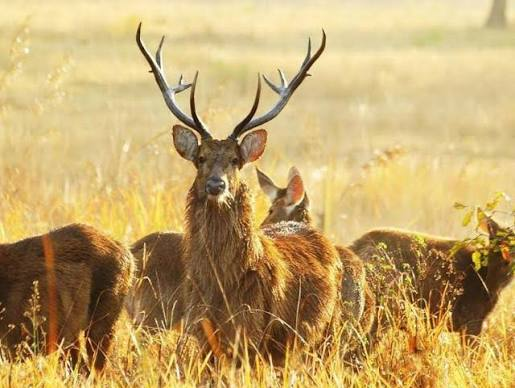
Panna National Park, Madhya Pradesh
Panna sits beside the fast-flowing Ken River, in a region known for diamond mining and an impressive tiger recovery story. Its gorges and dry forest feel different from Kanha’s meadows. Because Khajuraho lies close by, Panna pairs naturally with a temple visit on the same itinerary.
Other reserves, including Tadoba, Pench, Satpura and several in southern India, are also worth visiting. If one of them appeals, we can build it into a tailor-made itinerary.
Our Pick for First-Time Visitors: Ranthambore (Our expert tip, Exotic India Tourism)
For first-time visitors, I would definitely recommend Ranthambore National Park. One of its greatest advantages is its accessibility from Delhi, Agra and Jaipur, which makes it an excellent addition to a Golden Triangle itinerary.
What makes Ranthambore special is its beautiful landscape and the combination of wildlife and history. The historic fort adds an extraordinary atmosphere to the park, and its story fits perfectly into our cultural itineraries.
Even if you are not lucky enough to spot a tiger, there is usually plenty of other wildlife to see, including deer, antelopes, gazelles, wild birds and crocodiles. The scenery alone makes the safari a memorable experience.
For me, the real magic of Ranthambore lies in its dramatic natural surroundings, the old fort and the chance to watch wild animals in their natural habitat. It is a place where India’s rich history and extraordinary wildlife come together beautifully.
Best Time for a Tiger Safari Tour in India
Tigers live in these forests all year, but visibility changes with the seasons. Park core zones close during the monsoon, usually from around July until early or mid-October. Exact dates differ by park and by year, so always check with the forest department before you book.
- October to November: Core zones reopen after the rains. The forest is lush and temperatures are comfortable, but thick vegetation makes tigers harder to see.
- December to January: Mornings are cold and misty, and the light is soft. Open jeeps feel chilly before sunrise, so pack a hat, gloves and a warm jacket.
- February to March: Days warm up and the grass dries. Many travellers consider this the best balance of comfort and sightings.
- April to June: Temperatures often climb above 40°C, but foliage thins and tigers visit waterholes more often. Many wildlife specialists rate these months highest for sightings. Book morning drives and carry plenty of water.
- July to September: Core zones close for the monsoon and the breeding season. Buffer zones often stay open, though wildlife viewing is more limited.
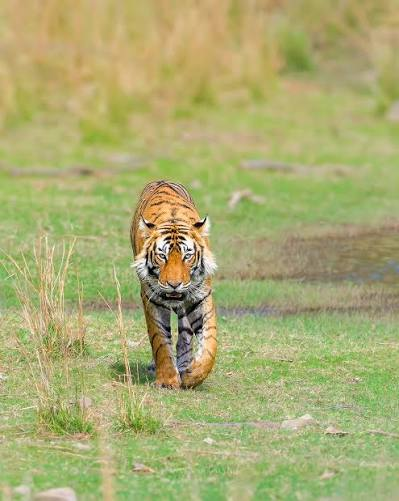
Which Month Would We Choose? (Our expert tip, Exotic India Tourism)
Personally, I would recommend March or October, as both months offer wonderful but very different safari experiences.
March is an excellent choice for travellers whose main priority is spotting tigers. As the dry season progresses, vegetation becomes thinner and animals are more likely to visit water sources, which makes wildlife easier to observe. Temperatures are also more comfortable than during the intense heat of April, May and June.
I also love October, when Ranthambore comes back to life after the monsoon rains. The landscape is beautifully green and the whole park feels fresh and vibrant. The denser vegetation can make tigers harder to spot, but the scenery is stunning and the safari is rewarding even without a tiger sighting.
How to Plan Your India Tiger Safari Tour
Plan Enough Safaris
A tiger can sleep through an entire drive in the shade, so one safari rarely settles the question. Plan at least two or three drives per park, and add a second park if your schedule allows. Our 11-day tiger itinerary schedules one safari in Panna and two each in Bandhavgarh and Kanha.
Book Permits Early
State forest departments limit how many vehicles enter each zone per session, and permits for popular parks sell out in peak months. Bookings usually go through official state portals, and you normally need passport details to complete them. Fees and booking windows change from season to season, so confirm them before you pay. When you book a tour with us, the safaris are part of the price, so you do not have to chase permits yourself.
Understand Zones and Vehicles
Parks are divided into safari zones, and each zone has its own character and sighting record. The forest department assigns your zone and route for each drive. Most visitors ride in an open jeep with a driver and a forest-department guide, and some parks also run larger shared canters. A jeep is quieter and more flexible, which usually helps your chances.
Sort Out the Logistics
The central Indian parks lie a long drive from the nearest airports, with Jabalpur and Nagpur the usual gateways. Corbett is reachable from Delhi by train to Ramnagar. Expect long road transfers between parks and build in rest time. If you want a different pace, a tailor-made India tour lets you set the number of parks, safaris and cultural stops.
Practical Tips Travellers Rarely Hear (Our expert tip, Exotic India Tourism)
Look at the safari zone, not just the national park. In Ranthambore, different zones offer different landscapes and wildlife experiences. From my personal experience, Zones 3 and 4 are particularly good choices for tiger sightings, although no zone can ever guarantee a tiger.
Book early. Safari permits are limited, and visitors cannot simply choose any zone on arrival. Zone availability depends on the booking system, and the requested zone may not always be confirmed. This is why I strongly recommend arranging safaris well in advance, especially in peak season.
Choose your lodge for its location. Early morning drives need a very early start, so I prefer lodges that are conveniently placed for safari departures. In Ranthambore we particularly like Tiger Den Resort, close to the main park entrance, for its peaceful setting.
Give yourself time. Rather than rushing from one destination to the next, spend at least two nights near the park and plan several safari drives. You will see more, and you will enjoy the forest without feeling rushed.
What to Expect on a Tiger Safari
Safaris run twice a day, in the early morning and again in the afternoon, and each drive usually lasts three to four hours. Your guide and driver read the forest as they go. Fresh pugmarks on the track, a langur’s alarm call or a sudden hush among the deer can all point to a tiger nearby. Then the waiting begins.
Some drives end with a tiger crossing the road thirty metres ahead. Others end with a sloth bear’s tracks, a sambar stag and a flash of kingfisher blue. Both are good safaris, and no one can promise which one you will get.
Follow the park rules, because they protect the animals and you. Stay seated in the vehicle, keep your voice low and never feed or call to wildlife. Leave drones at home and avoid flash photography.
What to pack:
- Muted clothing in khaki, olive or brown, plus warm layers for cold mornings
- A scarf or buff for dust, and a hat and sunscreen for the afternoon
- Binoculars, and a telephoto lens if you photograph wildlife
- A power bank and a reusable water bottle
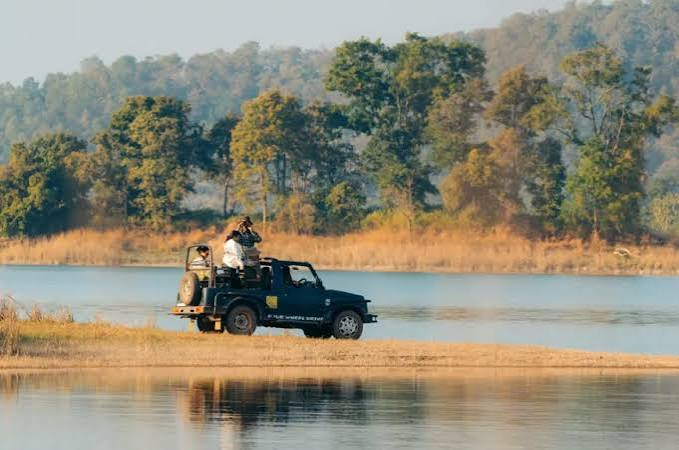
A Safari Morning
One thing that often surprises first-time visitors is just how cold safari mornings can be, especially when driving at speed in an open jeep to one of the more distant zones. The wind can be surprisingly chilly, so I always recommend a warm jacket.
Before the park gates open, all the safari vehicles gather outside, and you can feel the excitement in the air. Everyone is hoping to see a wild tiger, perhaps for the very first time in their life. Then the gates open, and the jeeps and larger safari vehicles head into the park, each taking a slightly different route.
What I love most is the sudden change in atmosphere when the ranger hears an alarm call from a bird or notices fresh tiger tracks. Everyone falls completely silent. Nobody moves. Nobody speaks. We may not have spotted the tiger yet, but there is a good chance that the tiger has already spotted us.
Sometimes all you see is the brief flick of a tail disappearing into the vegetation. Other times, a tiger strolls right past your jeep, completely unconcerned, as if it were the most natural thing in the world.
And even if you don’t see a tiger, Ranthambore still has plenty of surprises. I particularly enjoy the birdlife around the historic fort, where some birds are so used to people that they may land on your shoulder and eat from your hand.
For me, that mixture of anticipation, silence, excitement and unpredictability is what makes every safari unforgettable.
A Sample India Tiger Safari Tour from Exotic India Tourism
Our 11-day India Tiger Tour runs from Delhi to Kanha National Park and balances jungle with heritage:
- Days 1 to 3: Delhi and Agra. Visit Qutub Minar, Humayun’s Tomb, the Red Fort and Old Delhi, then travel to Agra for the Taj Mahal.
- Days 4 to 5: Orchha and Khajuraho. Take the train from Agra to Jhansi, explore Orchha’s Bundela architecture on the River Betwa, then tour Khajuraho’s UNESCO-listed temples.
- Day 6: Panna National Park. Check in to a lodge beside the Ken River and take your first jeep safari.
- Days 7 to 8: Bandhavgarh National Park. Continue along the tiger trail with two safaris.
- Days 9 to 10: Kanha National Park. Spend two more safaris in the meadows and sal forest.
- Day 11: Nagpur and Delhi. Fly back to Delhi for your onward connection.
The price covers accommodation in 3-star and 4-star hotels and lodges, the safaris in all three parks, the Agra–Jhansi train, the Nagpur–Delhi flight and chauffeured vehicles. If you prefer a shorter or different route, we can adapt it to your dates and interests.
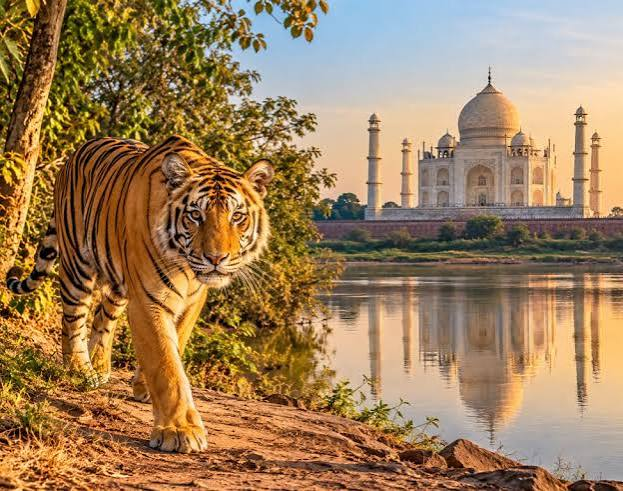
Why We Pair Culture with Wildlife (Our expert tip, Exotic India Tourism)
I believe combining cultural sightseeing with wildlife safaris is one of the best ways to experience India. Indian cities are fascinating, vibrant and full of extraordinary monuments, but they can also be overwhelming, with their constant noise, crowds and busy traffic.
National parks offer a completely different atmosphere. After several days in busy cities, it is wonderful to escape into nature, enjoy the quiet of the forest and simply slow down. A safari lets you recharge and return to India’s cities and historical sites with renewed energy.
What I find particularly special is the contrast between two very different sides of India. One day you may be exploring palaces, temples or bustling markets, and the next you are sitting quietly in an open jeep, listening to the forest and hoping to catch a glimpse of a wild tiger.
Short on time? Combine the Golden Triangle with Ranthambore National Park. It is a relatively easy addition to the classic Delhi–Agra–Jaipur route and a wonderful introduction to India’s wildlife without much extra travel.
Coming back to India? Explore other tiger reserves, particularly Bandhavgarh or Kanha, and combine them with less-visited cultural destinations. You will discover a different side of India beyond the classic tourist routes.
FAQs About an India Tiger Safari Tour
Can I be sure of seeing a tiger?
No. Tigers are wild, elusive animals, and no ethical operator can guarantee a sighting. You improve your odds by taking several safaris, visiting in the drier months and choosing parks known for good tiger density.
How many days do I need?
A short trip to Corbett or Ranthambore works in three to five days. A multi-park route such as our 11-day itinerary gives you more drives and a cultural thread through the trip.
Which park is best for a first tiger safari?
We recommend Ranthambore for first-timers. It offers dramatic scenery, a historic fort and easy access from Delhi, Agra and Jaipur. Bandhavgarh and Kanha suit those who want deeper immersion in central Indian forest.
When can I go on a tiger safari in India?
Core zones typically open from October or November until June and close for the monsoon. Check opening dates for your chosen park, because they vary by year.
Are tiger safaris safe?
Safaris run in guided vehicles under forest-department rules. If you follow your guide’s instructions and stay in the vehicle, the risk stays low.
Can I book a safari on my own?
Yes, through official state portals, but permits are limited and fill early in peak season. Many travellers prefer a tour that bundles permits, transfers and accommodation.
Plan Your India Tiger Safari Tour With Us
A great tiger trip depends on choosing the right park, the right season and enough drives. Exotic India Tourism designs tailor-made journeys across India, from tiger reserves to heritage cities. Browse our wildlife tours and safaris, or contact our team to shape your own India tiger safari tour.
Related Articles
Tailor-Made India Tour: How to Design Your Trip
Want a tailor-made India tour? See how it works, w...
Kashmir and Ladakh Tour Package: Plan Your Trip
Planning a Kashmir and Ladakh tour package? Learn...
Thiksey Monastery Ladakh – A Majestic Himalayan Sanctuary
Perched atop a hill in Ladakh, Thiksey Monastery c...

Udaipur City Palace – The Royal Jewel of Rajasthan
Overlooking the serene waters of Lake Pichola, Uda...
Varanasi Ghats – The Spiritual Heart of India
Experience the timeless charm of Varanasi’s ghats,...
Kerala Backwaters – A Tranquil Escape into Nature’s Serenity
Drift through the serene waterways of Kerala, wher...

Comments
Be the first person to comment on this article.
Leave a Comment